
Telling Real Righteous Clothing from Imitations: A Buyer’s Checklist
Navigating a crowded field of imitators, resellers, and blatant counterfeits is what shopping for streetwear in 2026 means. We Are Righteous has earned a reputation on thoughtful design and straightforward construction, which as it happens makes it a target for being counterfeited. This checklist breaks down the concrete details that set apart a real Righteous piece from a knockoff, so you can shop assured you’re getting the real thing whether you’re buying your first hoodie or building out a full wardrobe of righteous apparel.
Brand snobbery isn’t the point here. The point is keeping your money safe and ensuring you receive the item you actually spent money on. A counterfeit garment rarely keeps its shape, colour, or stitching past a handful of launderings, and it never carry the same heft — physically or symbolically — as something produced with real oversight does. Below, we break down what to check before you buy and what to inspect after delivery.
Head Back to the Source
To be truly certain you’re getting real righteous clothing, the single most reliable way is buying directly from We Are Righteous or from a retailer the brand has explicitly authorised. Not all vendors are acting in bad faith, but third-party marketplaces remain the riskiest channel, since authenticity-checking grows harder the more times an item gets resold. If a listing has no clear vendor details, no return policy, and a price that seems unrealistically cheap against the brand’s standard price bracket, regard it as a red flag rather than a lucky find.
If you’re shopping for pre-owned goods, check the seller’s track record. A seller with numerous listings covering unrelated brands, vague photos, and stock images instead of real product shots is a typical warning sign among counterfeit operations. Photos of the actual item — tags, care labels, and stitching close-ups included — are typically offered by genuine sellers, including private resellers of authentic pieces. Ask for them before committing if those are missing.
Another smart move is to go through several candid reviews. righteous sweats An independent we are righteous review — not the label’s self-published marketing — tends to call out specific details like the weight of the fabric, notes on whether it fits true to size, or how it behaves after washing things counterfeiters typically skip replicating. Should a righteous review keep pointing to the very design elements you’re spotting on the item you’re weighing up, it’s a reassuring signal that genuine stock stays consistent.
Take the Physical Garment a Thorough Look
Once you’re holding the piece, the fabric itself tells you the majority of what you need to know. Real, unfaked Righteous hoodies are generally constructed from substantial cotton fleece, generally in the 350-450 GSM range depending on which style it is. If the material feels unusually flimsy or appears sheer under everyday lighting, treat it as a red flag—especially when the listing claimed a premium-weight item.
Most buyers underestimate how much seam uniformity matters. Turn the piece inside out and check the seams near the cuffs, hem, and hood lining: genuine batches exhibit uniform stitch length, reinforced stress points at the pouch pocket, and no stray threads inside. Since uneven seams save time and money, knockoff makers routinely neglect it, whereas consistent stitching demands better tools and inspection.
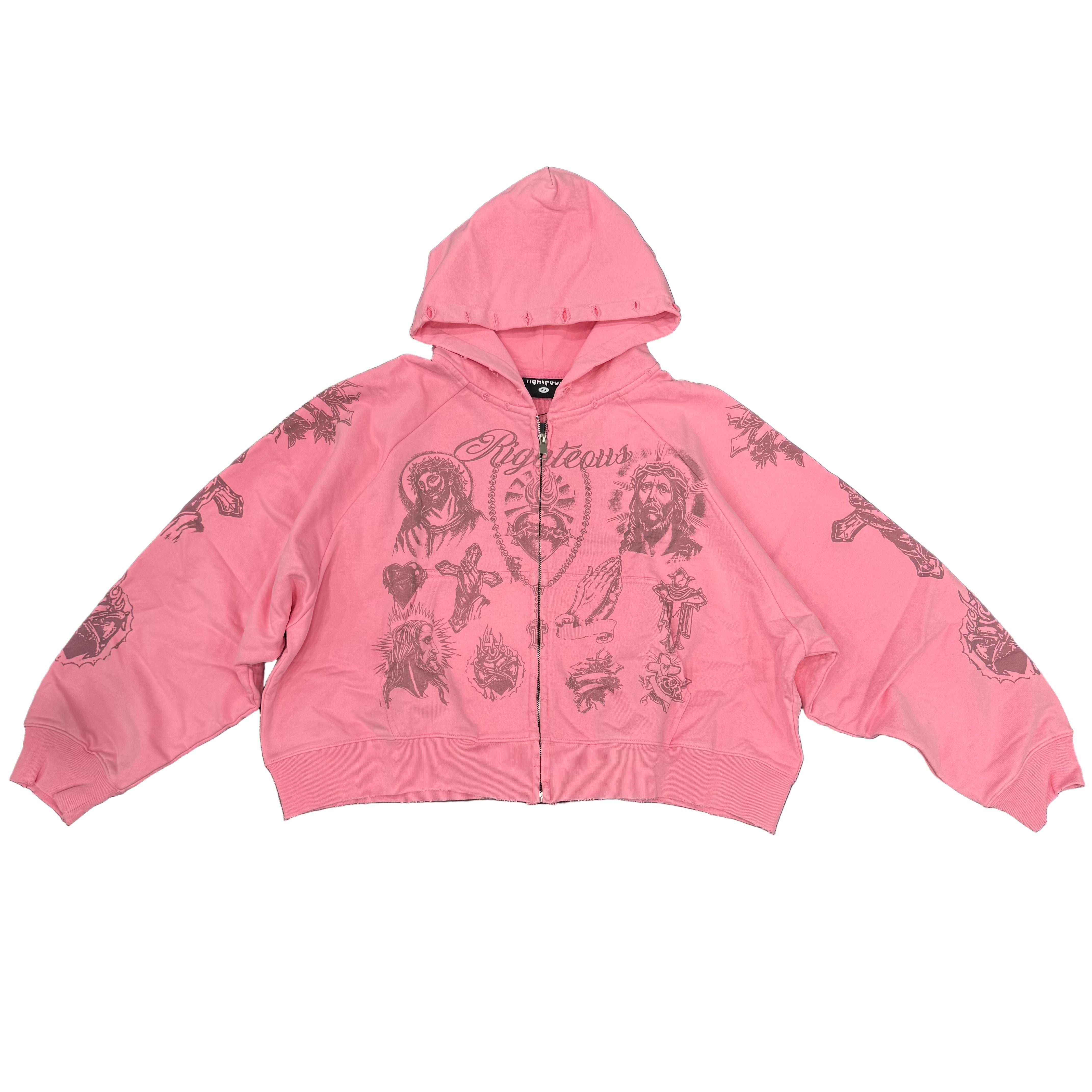
Check the cords and fittings next. Real items use drawstring aglets and eyelets that align with the rest of the garment’s finish — no mismatched metal tones, no unravelling drawstring ends, no plastic that feels brittle. If zippers are used, they should slide freely with no snagging, and all embroidered branding should sit flush against the fabric without wrinkling.
Lastly, examine the scent and texture of the fabric. Authentic cotton fleece has a mild, faintly earthy smell when new, while cheap counterfeit blends often give off a harsh chemical odor from substandard dyes and synthetic additives. Though subtle, but savvy purchasers use it all the time because it’s tough for knockoff producers to mimic consistently.
Look Closely at Brand Markings
Logos are where counterfeiters most often slip up, because matching precise sizing and positioning takes attention to detail they typically skip. On genuine Righteous Clothing pieces, the embroidered or printed wordmark sits at a uniform scale and placement across a given style run — cross-reference the official product photos with what arrived if you’re unsure.
Font weight and spacing are easy tells. A counterfeit logo often looks a bit squeezed, elongated, or unevenly spaced between letters, because it’s typically redrawn by hand instead of sourced from the true vector artwork. Genuine tags also list matching material content and washing guidance that correspond to the online listing at time of purchase — if the label says anything far removed from the online description, that’s an inconsistency you should look into.
Presentation of the shipment is another factor. Purchases through We Are Righteous typically arrive with consistent branded elements — plastic mailer bags or boxes, tissue paper or tags matching the current season’s branding, and paperwork that matches what you were sent at checkout. A unmarked package with no accompanying documents isn’t necessarily proof of a fake, but alongside other suspicious details, it strengthens the case.
Weigh the Differences Before Purchasing
When you’re unsure whether a listing is legitimate, running through a side-by-side comparison often clarifies things quickly. The chart that follows outlines the key distinctions shoppers commonly note between authenticated Righteous garments and fake or inaccurately described listings.
| Thing to inspect | Genuine Righteous Apparel | Frequent Red Flags on Knockoffs |
|---|---|---|
| Material heft | Dense, substantial fleece, around 350-450 GSM depending on which style | Lightweight, thin cloth that feels at odds with the posted GSM |
| Stitch quality | Tidy, uniform seams that are backed up where strain occurs, and free of any stray threads inside | Inconsistent stitch spacing, dangling threads, and seams that lack reinforcement |
| Branding alignment | Matching sizing and placement that mirrors the official product photos | A crooked, stretched, or oddly spaced logo |
| Shipping presentation | Branded mailer or box with matching invoice/order confirmation | Unbranded packaging, no documentation, mismatched order details |
| Vendor track record | Verified retailer or official We Are Righteous storefront | Unverified marketplace account with vague or stock photos |
This isn’t an exhaustive list, but it covers the checkpoints that come up most often in genuine we are righteous brand feedback and buyer discussions. When multiple of these checks don’t hold up together, it’s worth stopping before you check out.
Scrutinise Reviews Before Trusting Them
Not all reviews are created equal, and this matters enormously when you’re trying to verify a righteous clothing brand purchase. Look for reviews that mention specific, checkable details — exact fit notes, fabric behaviour after washing, or comparisons to previous seasons’ releases — rather than generic praise like «great quality, fast shipping» with no substance behind it.
Because video content shows the garment from multiple angles, under shifting lighting, and often includes close-ups of tags and stitching, video reviews and unboxings are harder to convincingly fake. If you’re relying on a written we are righteous review, cross-reference it against at least one other independent source before trusting it fully, especially if the review is unusually short or oddly enthusiastic without detail.
Don’t overlook patterns in complaints. When multiple reviewers flag the identical issue — for instance, sizing running large, or a particular colourway fading faster than expected — that’s legitimate, helpful feedback about the real product as opposed to a sign of counterfeiting. Knowing the difference between a real brand quality issue and evidence of counterfeiting is a key part of reading reviews critically.
One Last Look Before You Buy
Before you commit to a purchase, run through a short mental checklist: has the seller been verified, does the asking price fall within the brand’s typical range, do the photos display authentic stitching and tag details, and does the listing match the actual item received. None of these steps takes more than a few minutes, but together they significantly reduce your risk of receiving a counterfeit.
Should any doubt arise once you’ve bought something, reach out to whoever sold it or the brand in question with sharp images of the product, its tags, and the packaging. An honest seller will address a plain question about legitimacy; a cagey or combative reaction is a red flag in itself. Being a savvy buyer isn’t hard — all it takes is attentiveness to the things that actually matter.